The Reason for Your Injury Is Not What You Think It Is…
Most people can tell you exactly when their injury happened. For example:
- “I lifted that box and my back just went”
- “I felt it twinge during that workout”
- “I hurt myself getting out of bed”
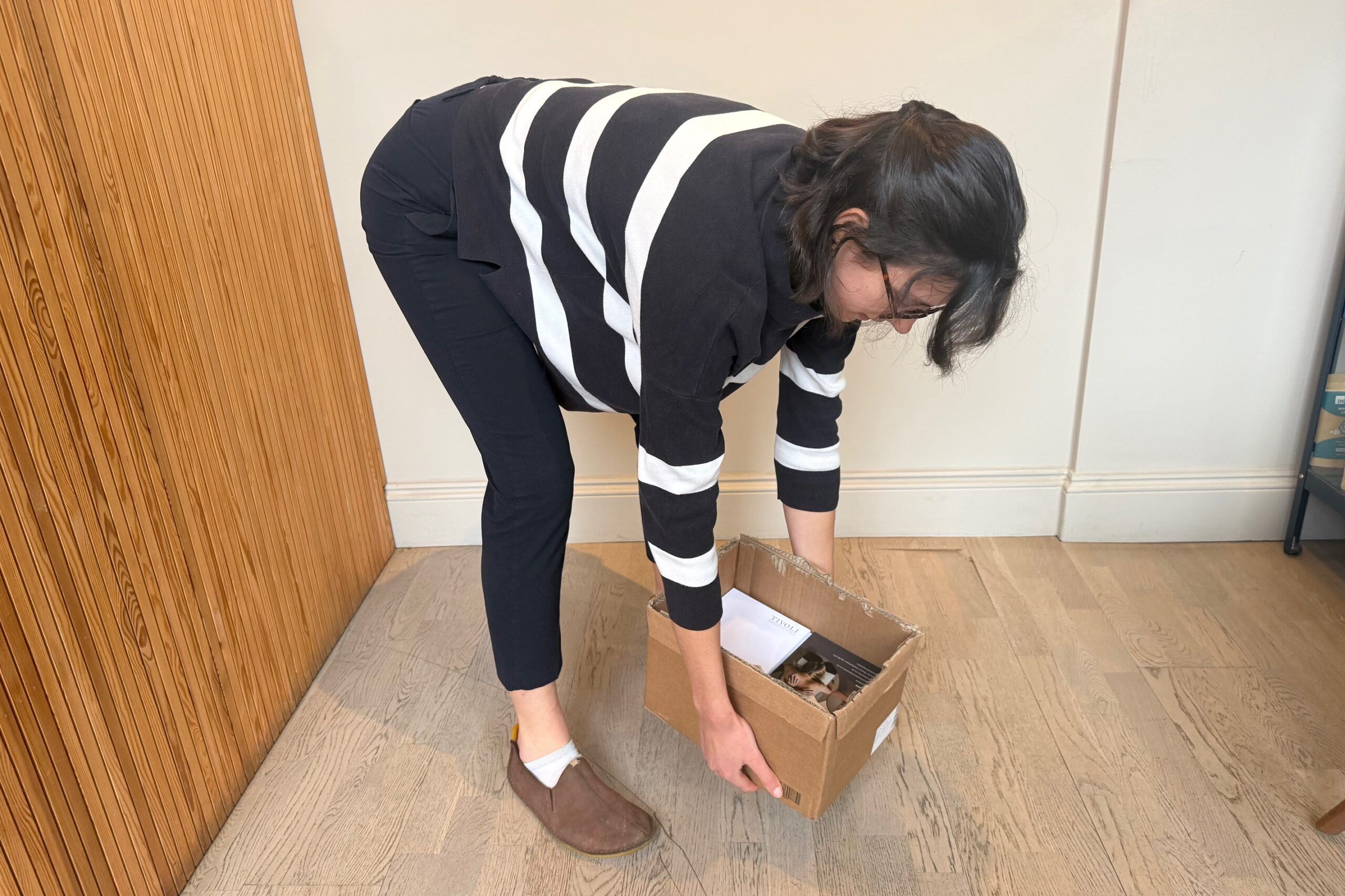
That one moment feels obvious as it is when the pain showed up, but what if I told you that that one moment is rarely the true cause of your injury, just the final straw.
There are injuries which truly are based on one single event, we call those “traumatic injuries” as they were caused by a trauma. But if ALL injuries were caused by the one-off event, then everybody who lifted a box, did that particular workout, or got out of bed, would get hurt. They don’t. So what’s the difference?
The answer lies in the bigger picture – what was going on long before you felt the dreaded pain. This is what we, as Chiropractors, aim to identify and help with.
Your body’s balance
I’m about to let you in on THE secret to unshakeable musculoskeletal health. The balance between flexibility (the length of your muscles), mobility (the movement range of your joints) and strength. If you can maintain a good level of these three factors, your body will be able to stand up to lots of life’s challenges without becoming injured. Easy, right? We wish…
We may be able to achieve a relatively good balance through commitment to consistent, correct training and optimising our lifestyles. However, we live in the modern world where no such lifestyle exists and if you have a particular form of training, hobby or sport which you enjoy, your body will bias itself to the demands of these things.
Your body is remarkably good at adapting. It will adapt to the things that you are spending more time doing to allow you to fulfil its demands effectively, without excess energy exertion. This will cause a bias towards muscle flexibility, muscle tightness, joint stiffness, strength, weakness or any combination of these patterns across the body to allow for optimal function within your unique context. For example:
- A rugby player will have strong but tight muscles to create power and resilience.
- A ballet dancer will have long muscles and mobile joints to allow them to create amazing shapes.
- An office worker might have weak, tight muscles due to sitting for 8 hours per day.
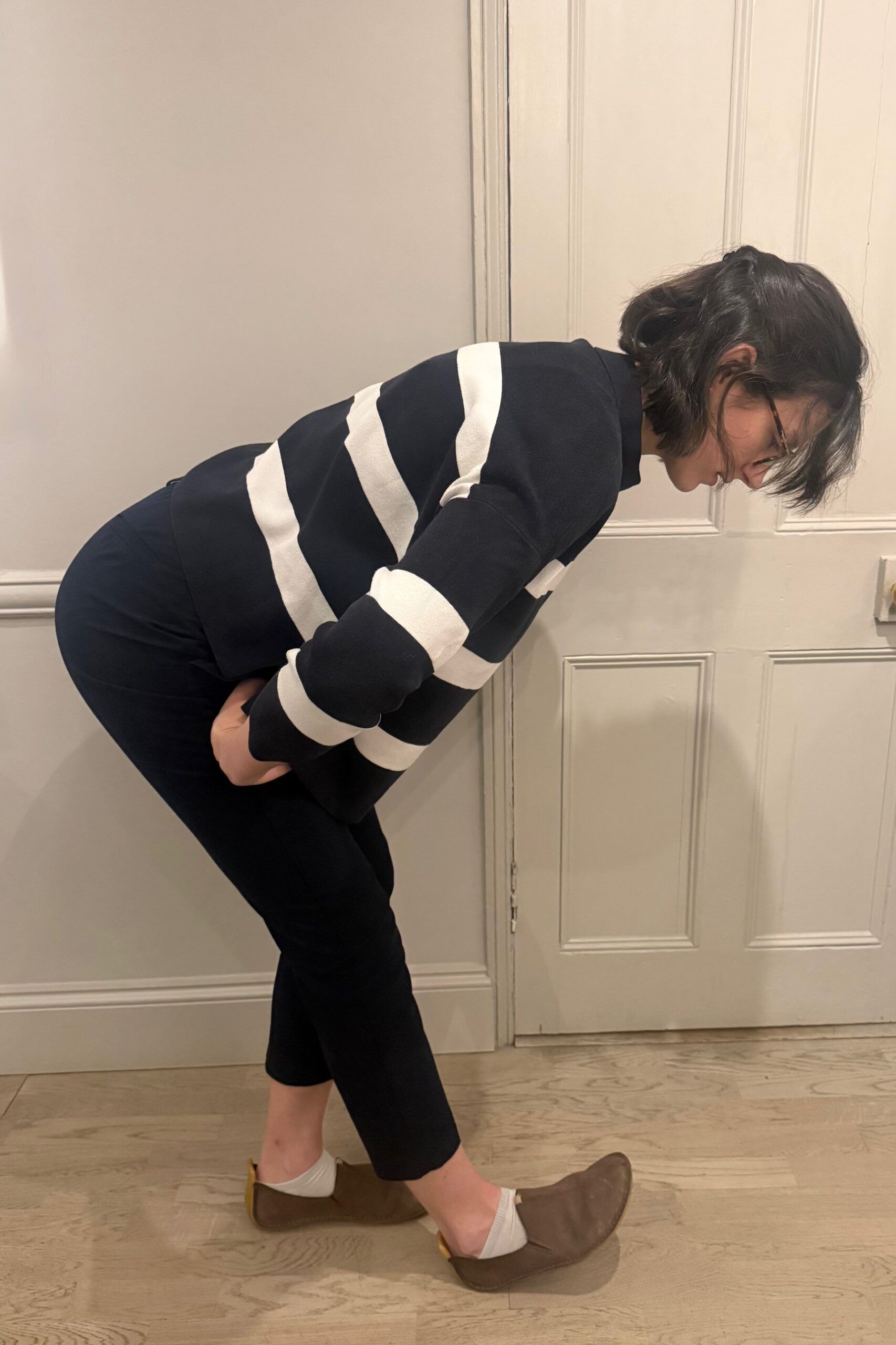
All of these factors will shift you away from that “ideal” balance between flexibility, mobility and strength. (Do note that “ideal” will look different for everyone).
The body also compensates, shifts load, protects and finds ways to keep you moving when things aren’t optimal (which is a lot of the time!). And it will do so without you knowing, it’s your body’s way of absorbing the stress. Clever, right? This, however, doesn’t come without its own problems or costs.
You see, through compensating over a long period of time, your body can build up areas of “dysfunction” such as loss in joint mobility, loss in strength and tightening muscles. Again, you probably wouldn’t notice this. But if we look at something called your adaptive range, you will see how this will become a problem.
Adaptive Range
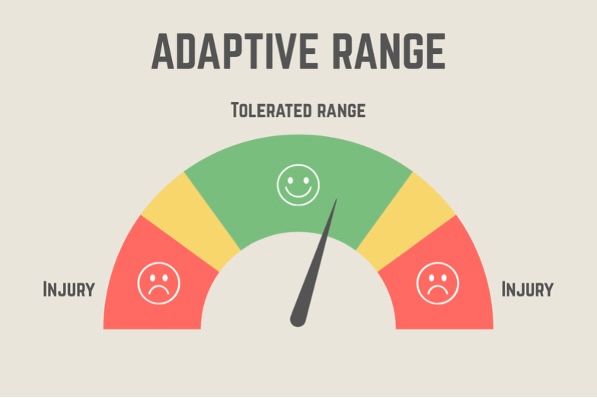
Adaptive range refers to the load, movement and stress a tissue can tolerate before “failure”, or injury. Every tissue in your body has one. If you put a load through a tissue that is beyond this range, this is when injury and pain occurs. The key is that this range is malleable and can change over time, such as in the adaptations we discussed above. Your adaptive range for a tissue will grow as your function improves. For example, if a muscle loosens, it can tolerate more stretch before injury, if a joint becomes more mobile, it can tolerate more movement before injury, and if a muscle becomes stronger, it can tolerate more load before injury. See my lovely (homemade) diagram below.
However, your adaptive range can also shrink. So, if a muscle becomes tighter, it can tolerate less stretch before injury… etc, etc…
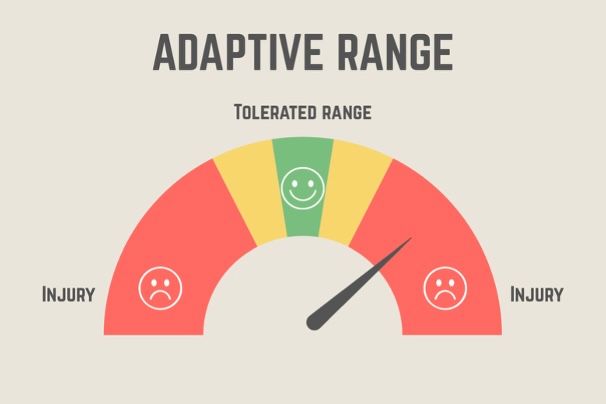
And when your range becomes smaller, one day you lift the box or get out of bed and injury occurs. Think of it like a paperclip. If you bend it once, it won’t snap, but bend it over and over again and eventually it will. It wasn’t only the last bend which caused the break, it was the cumulative effect over time.
Why does my adaptive range shrink?
To assess why your adaptive range might shrink or be limited, you have to look at your lifestyle and habits as a whole. It is down to the choices we make and how we spend our time. The list could be endless, but here are some common causes:
How you move and use your body:
- A sedentary lifestyle – such as your 9-5
- Limited movement variability
- Time spent on activities which bias flexibility or mobility over strength and vice versa, without supplementary exercise to balance this out
- Not applying enough appropriate load or stress to tissues regularly
- Inadequate recovery
Your broader wellbeing:
- Malnutrition, deficiencies and poor diet
- Inflammatory lifestyle choices
- Poor sleep
- High stress levels
- Poorly regulated nervous system
So, you can really begin to see how the injury did just occur because of that one thing. It happened after a build up of imbalance or dysfunction due to many factors within your lifestyle which started long before the pain. The pain is only the final symptom.
It’s important to acknowledge that there is no such thing as a perfect lifestyle. Life will always come with imbalances, biases, competing priorities, and challenges. As a result, our balance between flexibility, mobility, and strength will never be ideal all the time, and our adaptive range will naturally fluctuate.
That’s exactly why the body has an adaptive range in the first place, to tolerate these fluctuations and keep us functioning despite the imperfections of daily life. However, it’s also important to be realistic: because a perfect lifestyle doesn’t exist, a life completely free of pain or injury is unlikely.
What is realistic is creating awareness around these imbalances and working to restore and optimise them. By maximising your adaptive range, you significantly reduce your risk of injury and improve your long-term musculoskeletal health.
But how?
The first step is identifying where your individual imbalances or dysfunctions lie – and why they exist. This can be done with the guidance of your chiropractor, who can assess how your body moves, how it compensates, and where your capacity may be limited. From there, you can begin to address these areas and reduce unnecessary strain.
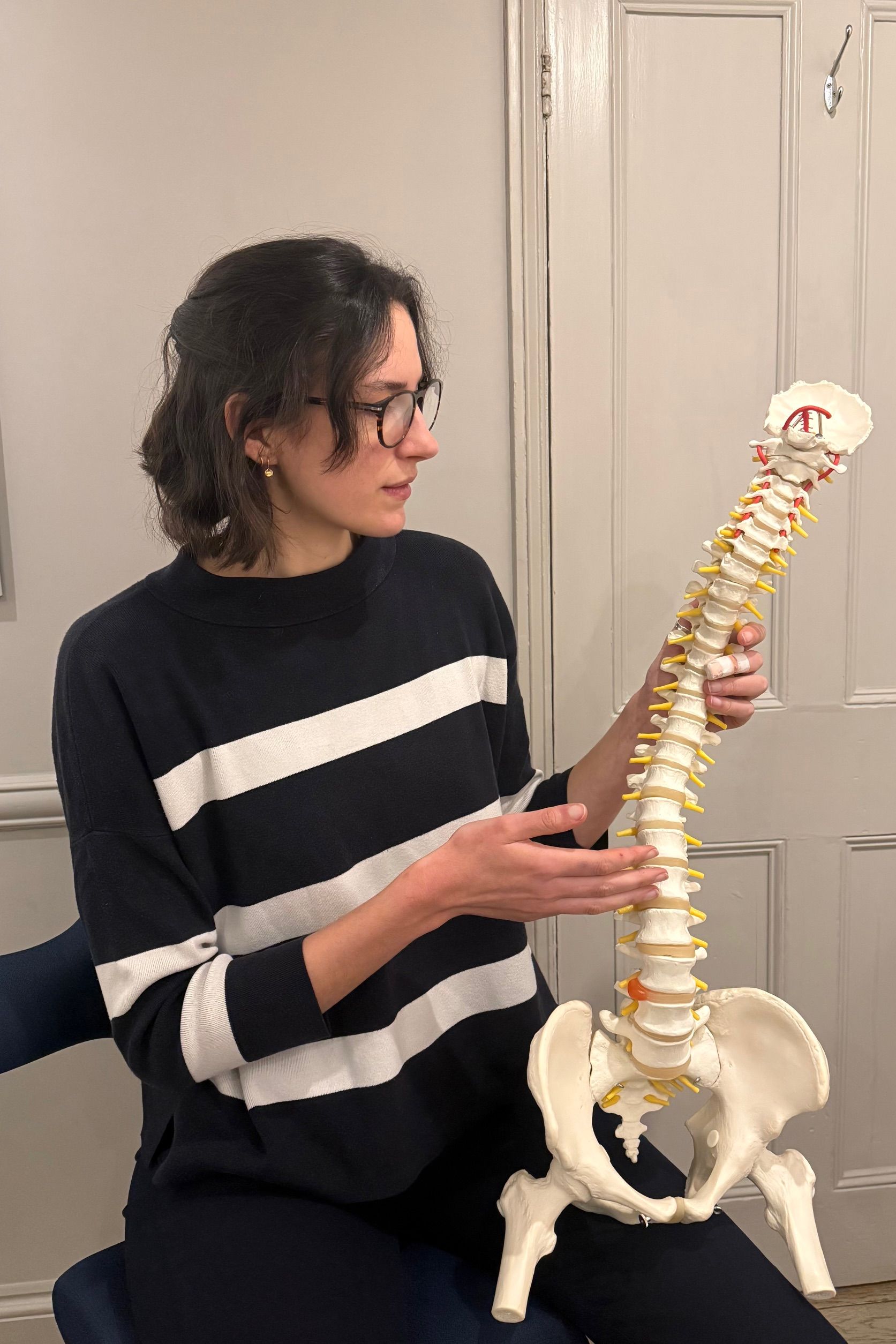
Chiropractic care can help restore movement, improve joint function, and address many of the underlying dysfunctions that contribute to injury. Just as importantly, we can guide you on how to adapt your lifestyle to better support your body – from how you move and train, to recovery, nutrition, and daily habits.
Our role isn’t just to help you recover from an existing injury, but to reduce the risk of future injury. Through ongoing care and a focus on how your body functions as a whole, we aim to help you move better, build resilience, and stay active for the long term.
Book in with your practitioner for further support.
Why not read our last blog by Sports Therapist Olivia, “Miles without the Misery: How to deal with “Runner’s Knee”